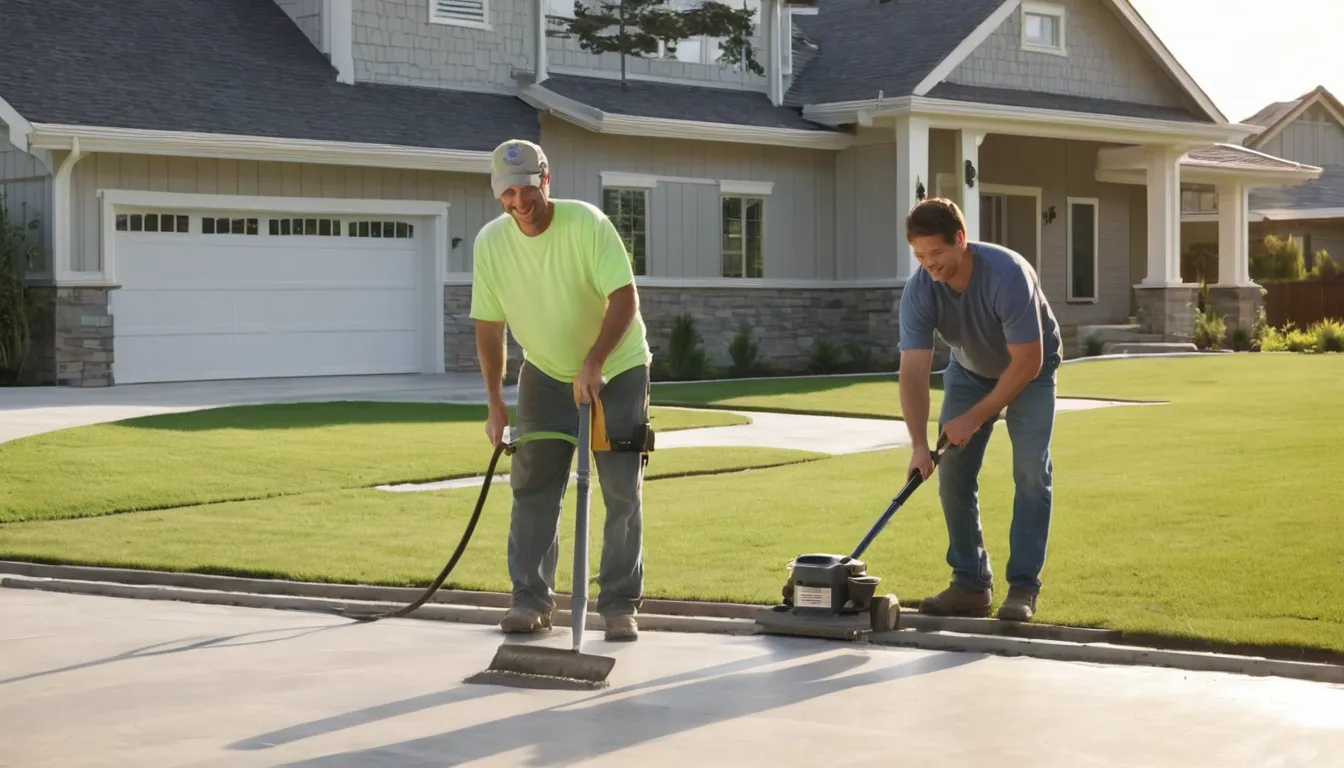
New Concrete Driveways for Lorain Homes
Request your driveway estimate
Say you pull in after work and the old slab has a new crack, a new dip, or a new puddle. A fresh concrete driveway fixes the whole surface instead of one spot at a time. It can also add a clean look to the front of your home.
Mattcategories Concrete is a referral service. We only connect you with independent providers in our network. Providers do the pouring, finishing and curing, and they set their own prices. You describe the job, get a written quote, and decide if it fits. There is no obligation to hire anyone.
Is it time for a new driveway?
Say you pull into the drive after a long shift. The front tire drops into a dip you did not notice last year. A crack now runs from the garage toward the street. You tell yourself it can wait. Then another winter rolls in.
If that sounds familiar, this page is for you. It covers new concrete driveways: taking out a worn slab and pouring a fresh one, or putting concrete where gravel or old asphalt sits today.
Who does what
Mattcategories Concrete is a referral service. We only connect you with independent local providers in our network. You send a request, and a provider reaches out. The provider visits, measures, and writes the quote.
Mattcategories Concrete does not pour, set prices, or handle your payment. Your agreement is with the provider. If you would rather talk it through first, request a callback to ask how the routing works.
Signs the slab is past patching
Some problems are urgent because they can hurt someone or let water do more harm. Look for these first:
- A raised edge or step that someone could trip on
- Cracks wide enough to catch a finger or a stroller wheel
- Water that pools and sits against the garage or foundation
- A surface that flakes, crumbles or shows loose gravel
- A slab that tilts toward the house
One or two of these on a small area may be a patch job. Several at once usually mean the whole drive is tired.
Patch it or pour it new?
Concrete driveway repair can handle a few hairline cracks or a chipped corner. It is a poor fit when the base has shifted or the surface is breaking up everywhere. Patches on a failing slab tend to show up again.
This site is about new pours. If you only need a small patch, tell the provider so you get an honest answer.
When the trouble is underneath
Say one corner of the drive sinks right beside the house, and a door inside starts to stick. That can point to soil washing out or settling near the foundation. Foundation repair experts are a different trade, and a new slab will not fix that problem.
A good provider will point it out before pouring over it. Spring flooding and sump pump runoff are common reasons soil moves, so mention both when you describe your home.
What a new driveway project includes
Most projects follow the same path:
- Marking the shape and checking the slope
- Removing the old drive or clearing the ground
- Building a compacted stone base
- Setting forms and adding steel or mesh
- Pouring, leveling and finishing the surface
- Cutting joints so cracks form in straight lines
- Curing the concrete so it gains strength slowly
This kind of concrete flatwork looks simple from the street. The prep underneath does most of the work.
Choosing size and thickness
A one-car drive is often 10 to 12 feet wide. A two-car drive runs closer to 20 to 24 feet. If guests park on the side, ask about a little extra width.
Four inches is a common depth for cars. If you park a heavy truck, a delivery van or an RV, ask about five or six inches and stronger reinforcement. Thicker concrete costs more, but it carries weight better.
Choosing a finish
Say it is February and the drive is glazed with frost. A light broom finish gives tires and boots something to grip. Many homeowners choose it for that reason.
Color and decorative patterns are possible too. Stamped looks are more common on patios, and stamped concrete patios have their own page here. For a drive, ask how a pattern holds up on a slope or in icy weather.
Planning for frost, heat and storms
Deep frost, hot humid summers, hail and sudden downpours all test a slab. Ask each provider how they handle:
- Slope that sends water away from the house
- Concrete mixed for repeated frost cycles
- Joint spacing that gives the slab room to move
- Pour timing when it is very hot or cold
Permits and the street apron
The apron is the strip where your drive meets the street, often crossing the sidewalk or curb. Many cities set their own rules for its width and thickness, and some require a permit. Homeowner associations may have rules too.
Providers often know the local process. Still, check with your city office, and ask the provider who pulls the permit.
Plan around home life
Say school starts at eight and a shift starts at seven. Nobody wants a driveway that is blocked at the wrong moment. Tell the provider about your routine when you describe the job.
Ask where cars can park, which days the drive will be closed, and how deliveries will reach you. Cars can often return after about a week. Full strength takes longer. The provider will confirm timing for your job.
Choosing a provider
Get two or three written quotes if you can. Compare them line by line instead of by total alone. Ask each provider:
- What is included, and what costs extra?
- How thick is the slab, and what goes underneath it?
- Does the quote cover removal and cleanup?
- Can they share proof of insurance and local references?
Be careful with any quote that is vague. A written scope protects both sides.
After the pour
Keep cars and feet off until the provider says it is safe. Wet the surface or follow the curing steps you are given. Wait on de-icing salt through the first winter, since young concrete is more sensitive. Ask about sealing, usually after the slab has cured for some weeks.
Some policies may cover sudden damage, but wear on an old drive is usually not covered. Check your policy if storm damage is part of your story.
Ready to describe your drive?
Tell us the size, the shape, and what bothers you most. Your request goes to a provider in our network, and you decide what happens next.
What's Included
Old slab removal
Providers can break out and haul away a cracked drive so the new one starts clean.
Base and drainage prep
Compacted stone and a smart slope keep water moving away from your garage.
Forms and reinforcement
Steel or mesh goes in before the pour to help the slab hold together.
Finishing and curing
A grippy surface, cut joints and slow curing give the new drive a strong start.
Typical new driveway costs in the U.S.
Prices vary by size, soil, finish and local rules. These common U.S. ranges are a starting point, so always ask for a written quote.
| Item | Typical range | Notes |
|---|---|---|
| Standard poured driveway | $6 – $15 per sq ft | Plain gray concrete with a broom finish |
| Two-car drive, about 400 sq ft | $3,500 – $8,000 | Depends on thickness and site access |
| Old slab removal | $1 – $3 per sq ft | Often higher for thick or reinforced concrete |
| Base and grading | $1 – $3 per sq ft | Soft or wet soil can raise the price |
| Color or decorative finish | $3 – $12 extra per sq ft | Patterns and stains add labor |
| Permit and apron work | $50 – $1,500 | Rules and fees differ by city |
How It Works
Describe your drive
Tell us the size, the current surface and what you want changed.
A provider reaches out
An independent provider in our network contacts you to talk through the job.
Review the written quote
Compare scope, thickness, timing and price. You are never obligated to accept.
Provider pours and finishes
If you hire them, the provider does the work and explains curing and care.
Why Call Mattcategories Concrete
Honest about our role
Mattcategories Concrete only makes the introduction. Providers do the pouring and set their own prices.
Simple requests
Describe your drive in a few lines. No long forms and no pressure to decide.
Local providers
Requests go to independent providers who know your area's frost, storms and street rules.
Fits busy homes
Share your routine so the work can plan around home life.
Other Services
Need concrete driveways services in Lorain?
Tell us about your driveway or patio plan. Request an estimate and a local provider from the network can follow up with you.
Concrete Driveways Services FAQ
How long does a new concrete driveway take?
Removal, prep and the pour often fit within a few days. Cars usually wait about a week, and full strength takes longer. Weather and size change things, so ask the provider for a schedule.
How thick should a concrete driveway be?
Four inches is common for regular cars. Heavy trucks, RVs or delivery vehicles often call for five or six inches with reinforcement. A local provider can suggest a depth that suits your soil and use.
Do I need a permit to replace my driveway?
Often, yes, especially where the drive meets the street apron or sidewalk. Rules vary by city and neighborhood. Check with your local office and ask the provider who handles the paperwork.
Reach a local provider
Tell us about your driveway or patio plan. Request an estimate and a local provider from the network can follow up with you.
No obligation